




tel Kościół Szczawnica
+48182622575

e-mail Kościół Szczawnica
szczawnica@diecezja.tarnow.pl
Last update 2025-11-20
-2025-09-16-09-47-54.webp)
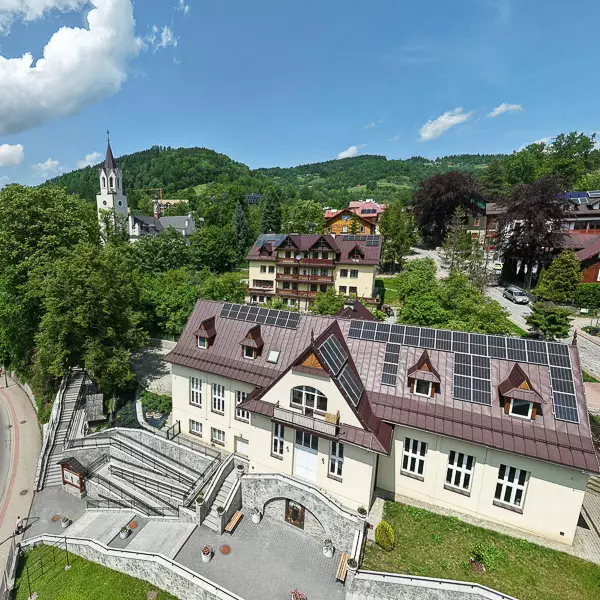
Amid the trees, in the very center of the spa town, stands a church that has witnessed Szczawnica’s transformation from a mountain village into a bustling resort. The Church of St. Adalbert is not only architecture – it is history woven into the everyday life of both residents and visitors.
In 1875, Szczawnica had only two places of worship: the old 15th-century wooden church in the village center at Kościelisko, and a 19th-century chapel in the spa district on the edge of the Upper Park. However, the growing number of spa guests and residents made the construction of a larger church necessary.
In January 1876, a church committee was established under the leadership of Józef Szalay, the founder of the spa and the main initiator of the project. It was decided that within ten years a new church would be built. However, Szalay’s death later that year halted the realization of these plans.
The idea was revisited five years later. The committee commissioned Stanisław Eliasz-Radzikowski, an architect living in Szczawnica, to revise and improve the church designs originally prepared by Szalay. Eliasz was well known in the town — he had overseen the construction of the Guest Manor.
The first design was deemed too expensive. In 1883, Eliasz presented a revised concept: the church was to accommodate about one thousand people, with the cost estimated at just under 30,000 Austrian florins — the equivalent of around 700,000 euros today. In the spring of 1884, a tender was announced for the construction management. The only candidate was Eliasz himself, who took on supervision of the works.
On June 14, 1884, the foundations of the new church were blessed. Construction began on schedule, but due to insufficient funds, the work dragged on for several years. The solemn consecration took place only on July 28, 1892. The ceremony was led by the former bishop of Vilnius, Karol Hryniewiecki. Relics of St. Adalbert, provided from the treasury of the Archdiocese of Gniezno, were placed in the main altar.
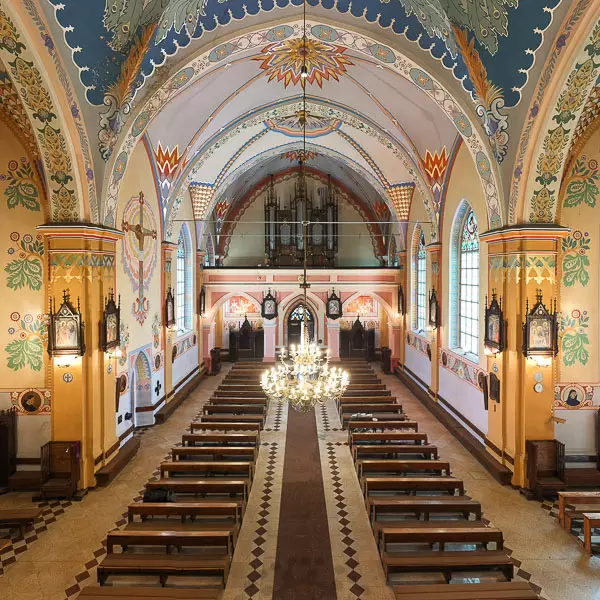
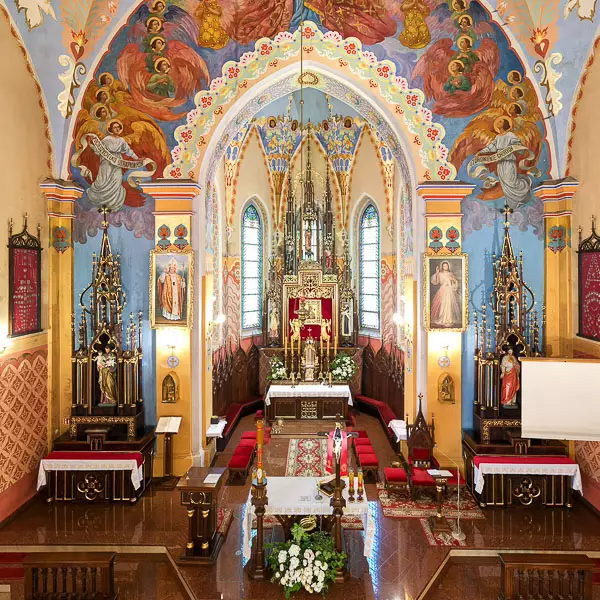
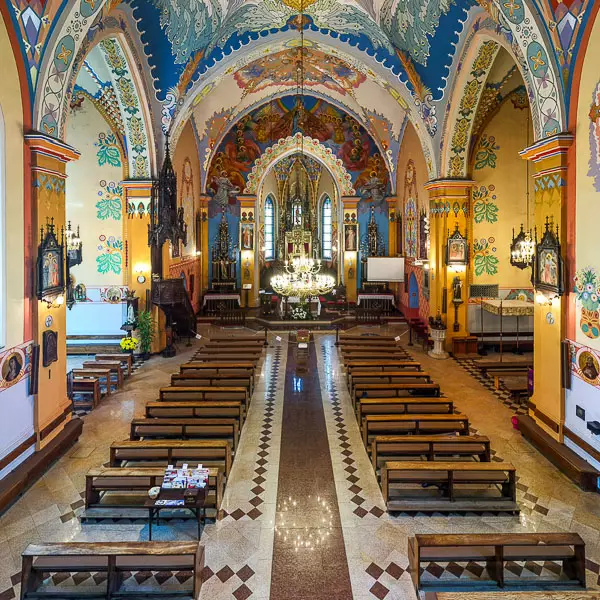
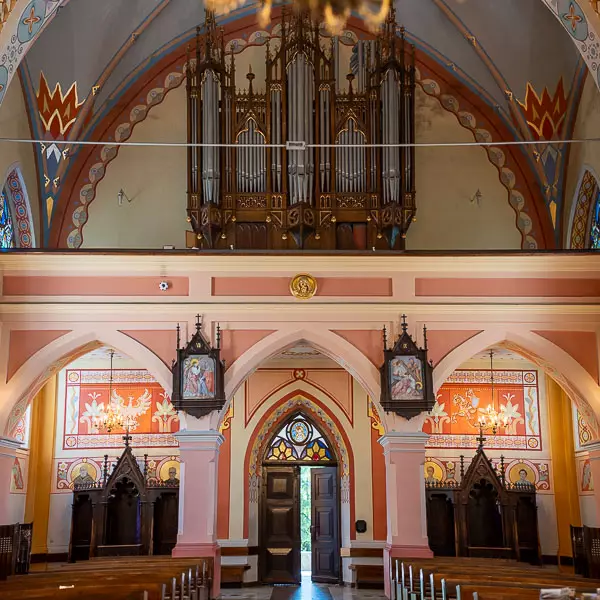
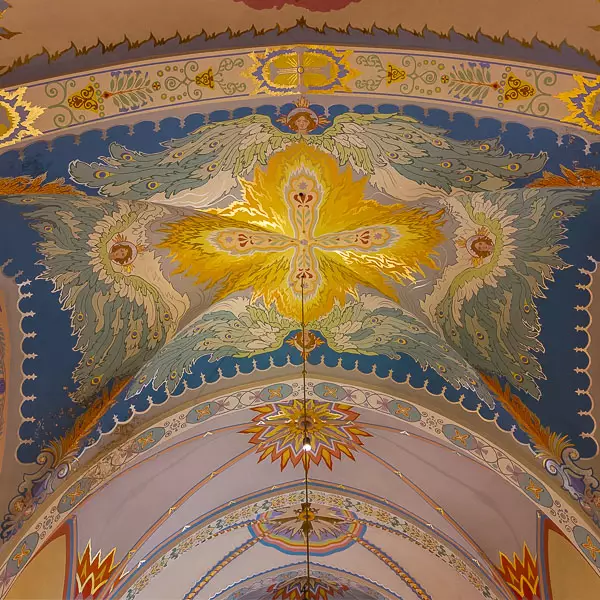
The church was built of stone and brick in the popular Neo-Gothic style of the time. It is a single-nave structure with a narrower, polygonally closed presbytery and a front tower. Two side chapels form a kind of transept, giving the entire layout the plan of a Latin cross. The white plastered façades are enlivened by buttresses and tall, pointed-arch windows. Inside, the three-bay nave is covered with a ribbed vault, which also extends over the chapels and the presbytery. Originally, the roof was shingled, later replaced with sheet metal.
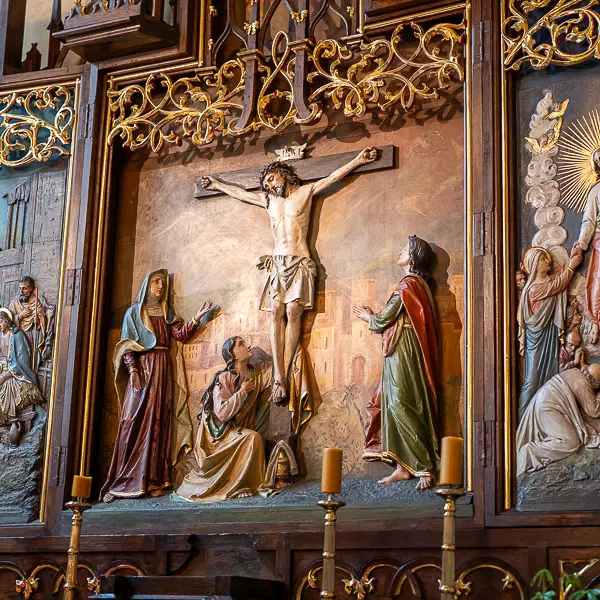
The tower houses bells transferred from the old church. In 1901, a clock was installed on it, which still remains a distinctive feature of the spa town’s panorama. Due to the terrain, the church is not oriented east–west, but north–south. Around the church are the Stations of the Cross, erected in commemoration of the Jubilee of Redemption in 1983. In the chapels built by Stanisław Salamon, local sculptor Ryszard Hamerski placed expressive wooden statues depicting the Passion of Christ.
The new church, built through the initiative of the townspeople and the dedication of local community leaders, quickly became a symbol of a growing Szczawnica. Today, the Church of St. Adalbert serves not only as a parish church but also as an important landmark on the town’s map and a testament to the times when a small mountain village was transforming into a modern resort.